Master of Letters in Painting and Printmaking, Glasgow School of Art

I am a contemporary figurative painter, having recently completed a Master of Letters in Fine Art Practice at the Glasgow School of Art. My current body of work explores queer identity through a deeply personal lens. Using oil on canvas, I reflect on moments of resilience, vulnerability, and the evolving sense of self.

The work is shaped by my experiences of growing up during the late 1970s and 1980s, when being a gay man often meant navigating a double life. I respond to the societal and political pressures of that era—forces that sought to suppress queer lives through targeted shame and rigid ideals of family and masculinity.

Now, later in life, I find myself discarding the shame I once carried for simply being who I am. Painting has become a way to examine that internalised shame, and to let it go. It's an act of reclamation—of self, of story, and of space.

The figures in my paintings are either anonymised or self-portraits. This allows me to shift between emotional distance and direct self-examination, deepening my connection to the work while inviting viewers to reflect on their own experiences of identity and belonging.

Using figure, colour, and space, I construct compositions that explore the emotional impact of those years—the damage endured, and the quiet strength that emerged. The domestic and internal spaces I depict serve as sites of memory, tension, and quiet resistance. Some works are overtly autobiographical; others speak to shared queer experience, rooted in survival and the pursuit of joy.

The Paintings

Presenting self disclosure to the fragile ease of shared queer domesticity.

Untitled

80 x 60 cm  · Not Available

The newest addition to 'Reflections of a Queer Life'.

In this painting Brash projects his younger self into the narrative — at 12 years old, sensing that life was changing and that the years ahead would not match the norms set by societal expectations and the politics of the day. His queer life was emerging, though never able to show itself because of fear.

The Scottish Colourists have been a strong influence throughout Brash's life — never more so than while growing up and studying at school and art school in Glasgow, where their impressionistic, colourful figurative subjects carried the energy and vitality he was drawn to. He has recently returned to their work as an historical reference, drawn to their use of light and choice of subject. Brash applies his own palette and treatment, with a slight nod to their extraordinary brushwork.

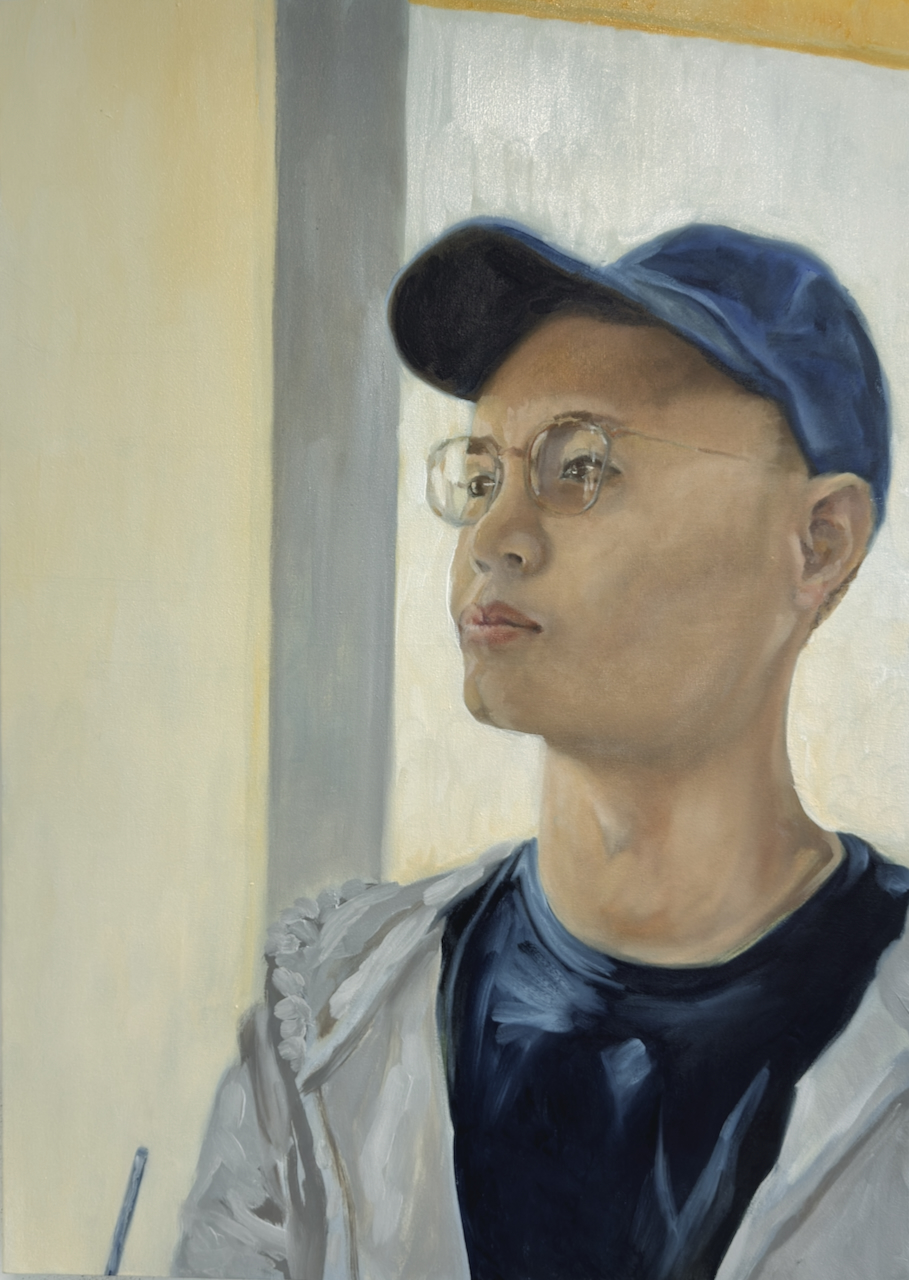
Iced Mocha Moment

85 x 60 cm  · Not for sale

This portrait forms part of 'Reflections of a Queer Life', a body of work Brash has been developing over eighteen months. Within any relationship, there are moments of deep contemplation and quiet contentment that can wash through the mind and body at any time, in any place. This painting catches his partner absorbed in the warmth of a Swedish café, its atmosphere, its light, and the ease of simply being there together.

Unforeseen Consequences

120 x 180 cm  · Not Available

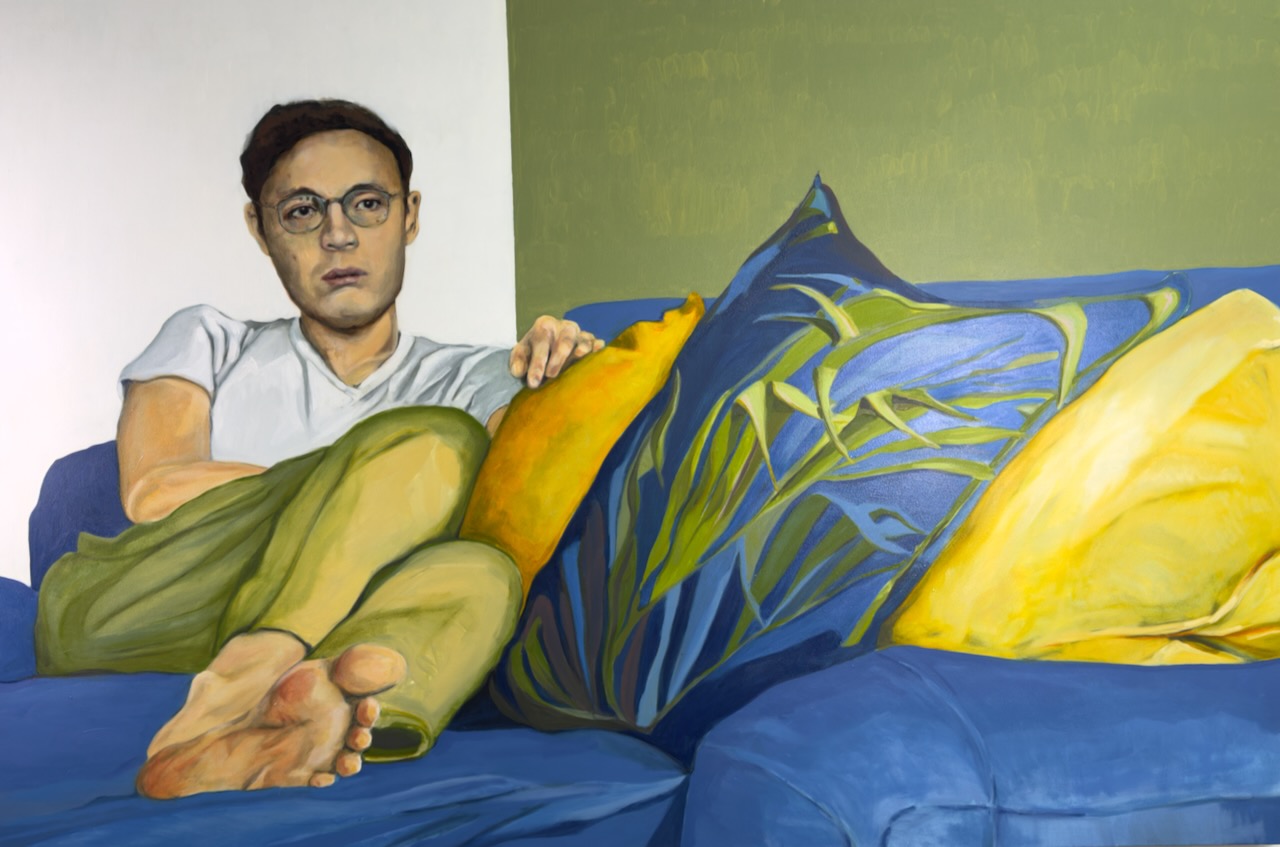
Unforeseen Consequences is a self-portrait, painted on the same sofa and with the same floral cushion that appears in the companion piece Don’t Dream It, Be It… The cushion, recurring across both works, carries a consistent meaning: his partner's tropical homeland, the vast array of possibility and self-discovery the world offers, the paradise of what could be.

Brash didn’t notice until the painting was almost finished that he had painted himself gripping that cushion so tightly it distorts in his hands. He hadn’t planned that. When he saw it, he understood what the painting was saying: that love, loyalty and accommodation can quietly shrink the space you allow yourself. Not damage — something quieter than that. A self-limiting that you don’t notice until it’s already in the canvas.

Together, these two paintings suggest that knowing who you are isn’t something you settle once. Even inside love, that question keeps coming back.

Don't Dream It, Be It..

120 x 180 cm  · Not Available

"Don’t dream it, be it.." presents a quiet moment in a shared domestic space, where comfort and ambition coexist. A man reclines on a sofa, surrounded by an interior that blooms into a tropical landscape, a fragment of his memories of Hong Kong and a stand‑in for the life he imagines but does not yet claim. His body folds inward while the cushions flare outward, suggesting aspirations held in check, and a faith in his partner so strong it risks eclipsing his own desires. Within the wider series Reflections of a Queer Life, this work dwells on the compromises and negotiations that shape queer relationships behind closed doors, asking where support ends and self‑silencing begins.

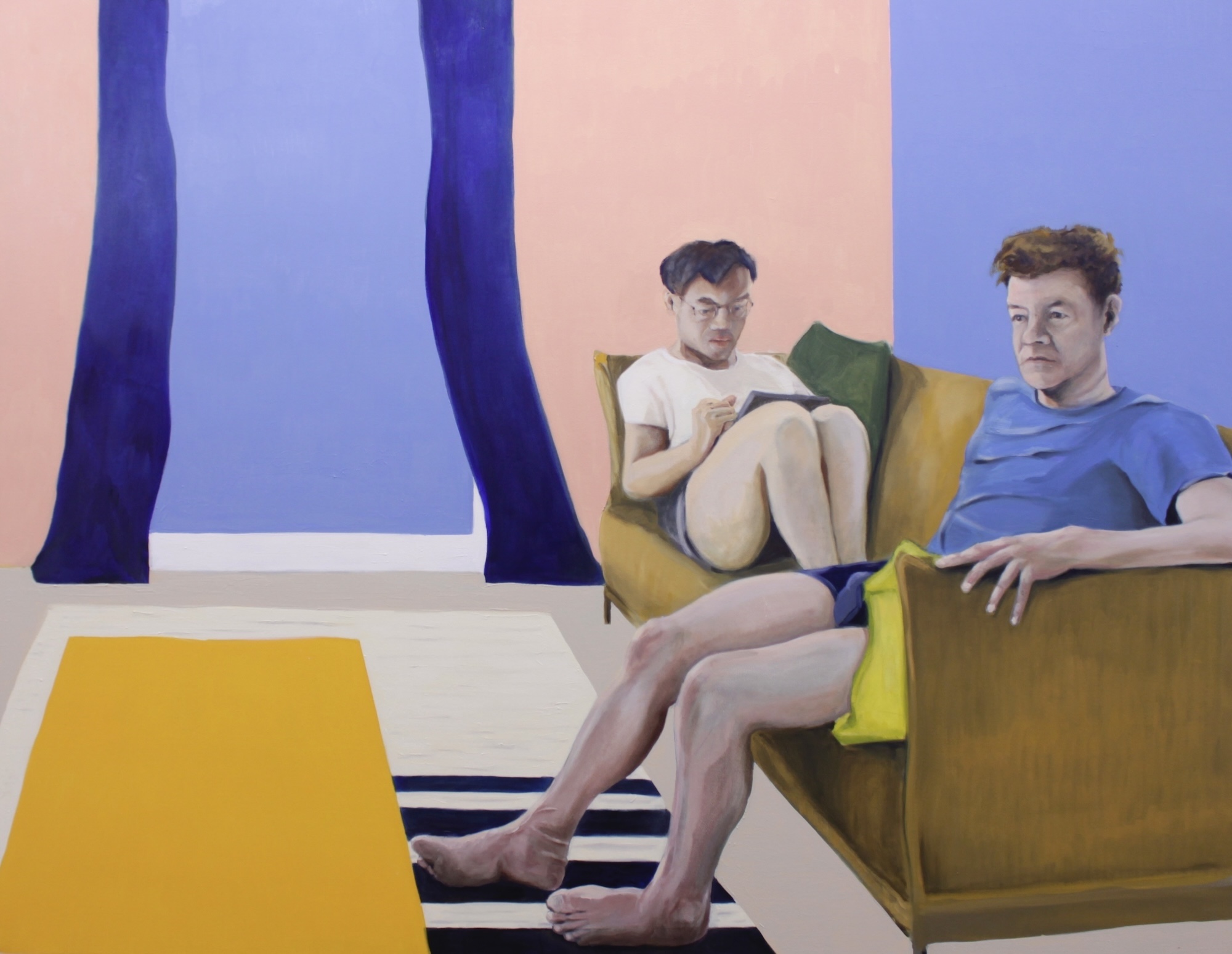
Liminal Comfort

140 x 180 cm  · Available

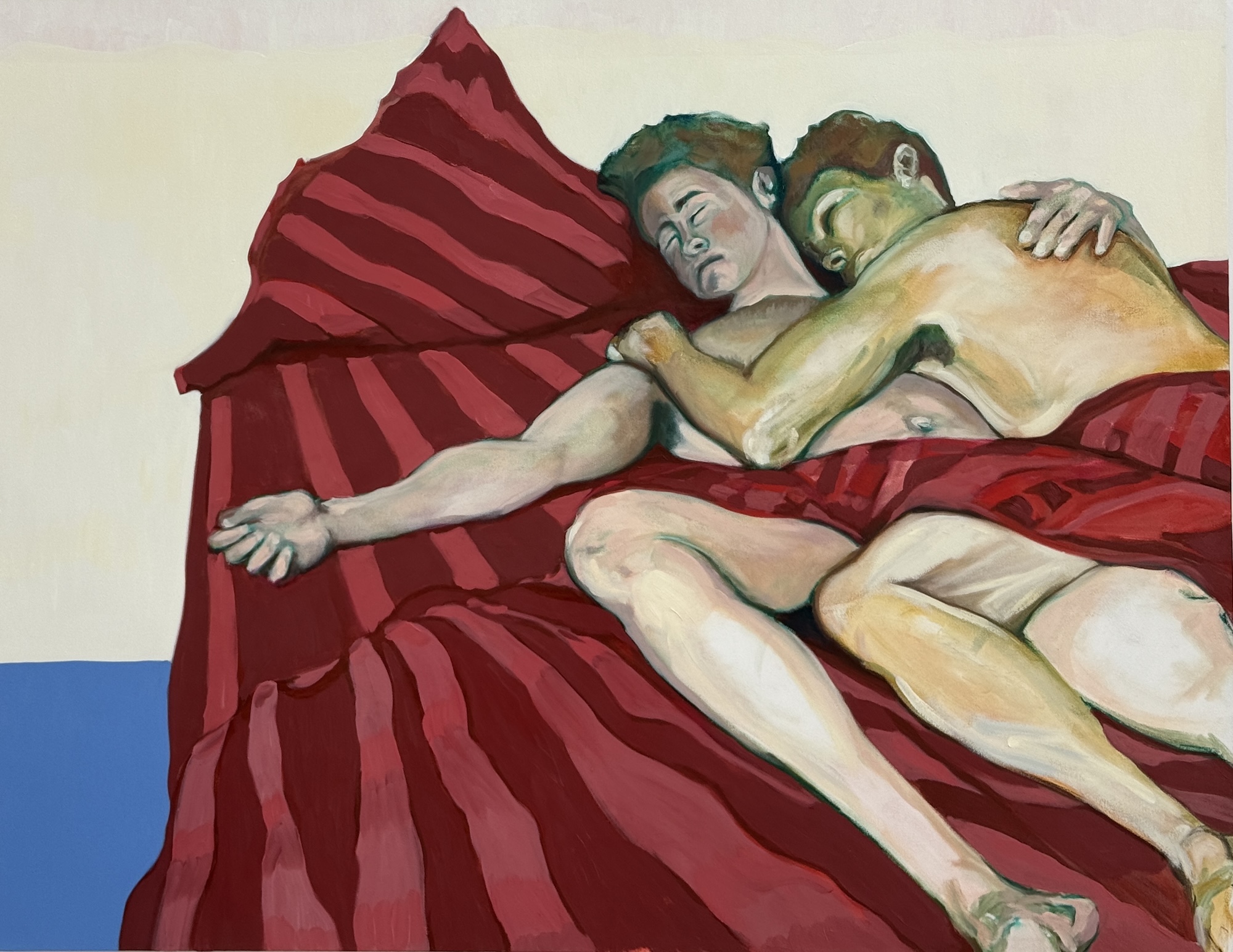
Liminal Comfort is the most recent work in the series and turns towards the possibility of shared rest after years of vigilance. Two bodies sit quietly alongside each other in a threshold space, held between inside and outside, private and public. The pose is quiet but intimate, suggesting people who have learned how to carry their own histories and are now testing what it feels like to share the weight. The comfort here is real, but it is also newly won; there is still an awareness that safety has not always been guaranteed.

The setting keeps that tension alive. The figures, one of them a quiet self-portrait of the artist, are placed close to edges and openings rather than in the deep centre of a room, as if they are occupying a space that is still in the process of becoming home. Multi-coloured blocks move across the painting, opening the palette out beyond the earlier, more restricted fields of yellow, red and blue. Earthy greens give a sense of being grounded, while returning notes of yellow and other hues suggest a widening of possibility – not just one future, but several that might be lived. The composition holds both the ease of sitting together and the alertness that comes from knowing how fragile such moments can be.

Liminal Comfort is a painting about queer domesticity as something constructed rather than assumed. It points to a stage where self-knowledge, past relationships and ongoing shame have all been acknowledged, and where there is now room to imagine a life that includes mutual care, ordinary days and the chance to love again. The work sits in that in-between zone where hope feels tangible but not yet fixed, honouring the courage it takes to relax, even partially, into another person after everything that has gone before.

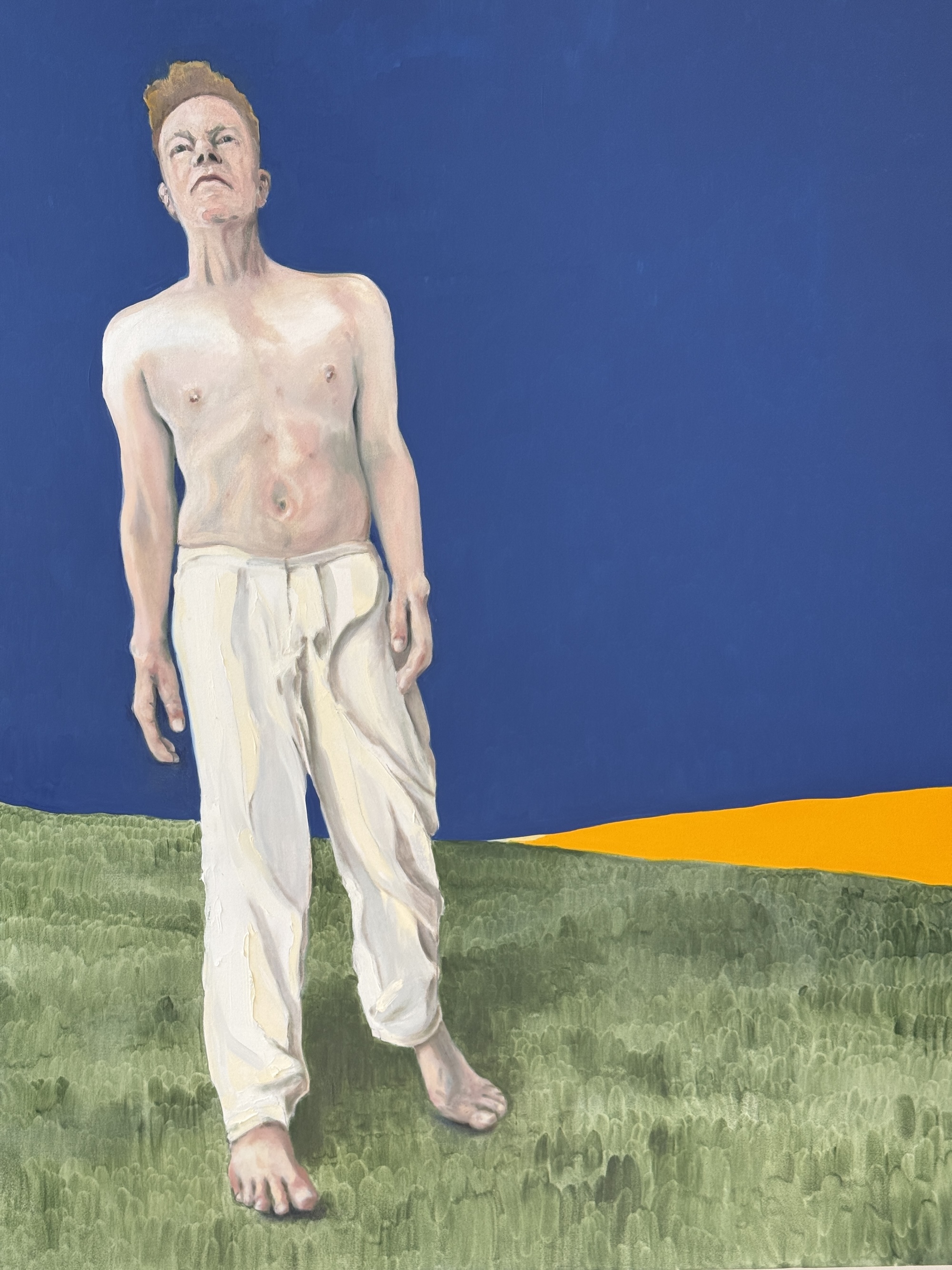
Defiance

180 x 140 cm  · Available

Defiance is a self-portrait that looks at a more recent chapter in the story, after the end of a thirty-year partnership and a period of burnout from excessive work. The figure stands alone on a field of green, the body carrying both the weight of heartbreak and the work of looking inward, unpicking how he has been living and what might need to change. The gesture of the arm and the angle of the torso mark a pivot point: a quiet but decisive move away from being defined by loss, towards rebuilding a life that feels true to who he is now.

The aim was to picture this shift without resorting to spectacle. The pose is contained rather than dramatic, but the set of the shoulders, the line of the spine and the directness of the gaze all signal a new refusal to disappear. The placement of the subject’s right foot, caught at the moment just before it settles on the ground, underlines the sense of moving towards a more certain footing in what comes next. The sweep of green grass underfoot provides a sense of grounding, a visualisation of the steadier wisdom that has come through reflection and survival. Around the figure, fields of colour and open space hold the tension between vulnerability and resolve, suggesting someone who has been through rupture and is choosing, carefully, to step forward.

At this stage, sexuality itself is not the site of conflict; the culture has moved, and so has he. The defiance here is not against the fact of being gay, but against the temptation to give up on connection, intimacy and a fully lived life after profound exhaustion and loss. The painting insists on the right to be an authentic, feeling person in the present, to begin learning how to love himself again, and to imagine the possibility of future love without erasing what has gone before.
Resilience

120 x 180 cm  · Available

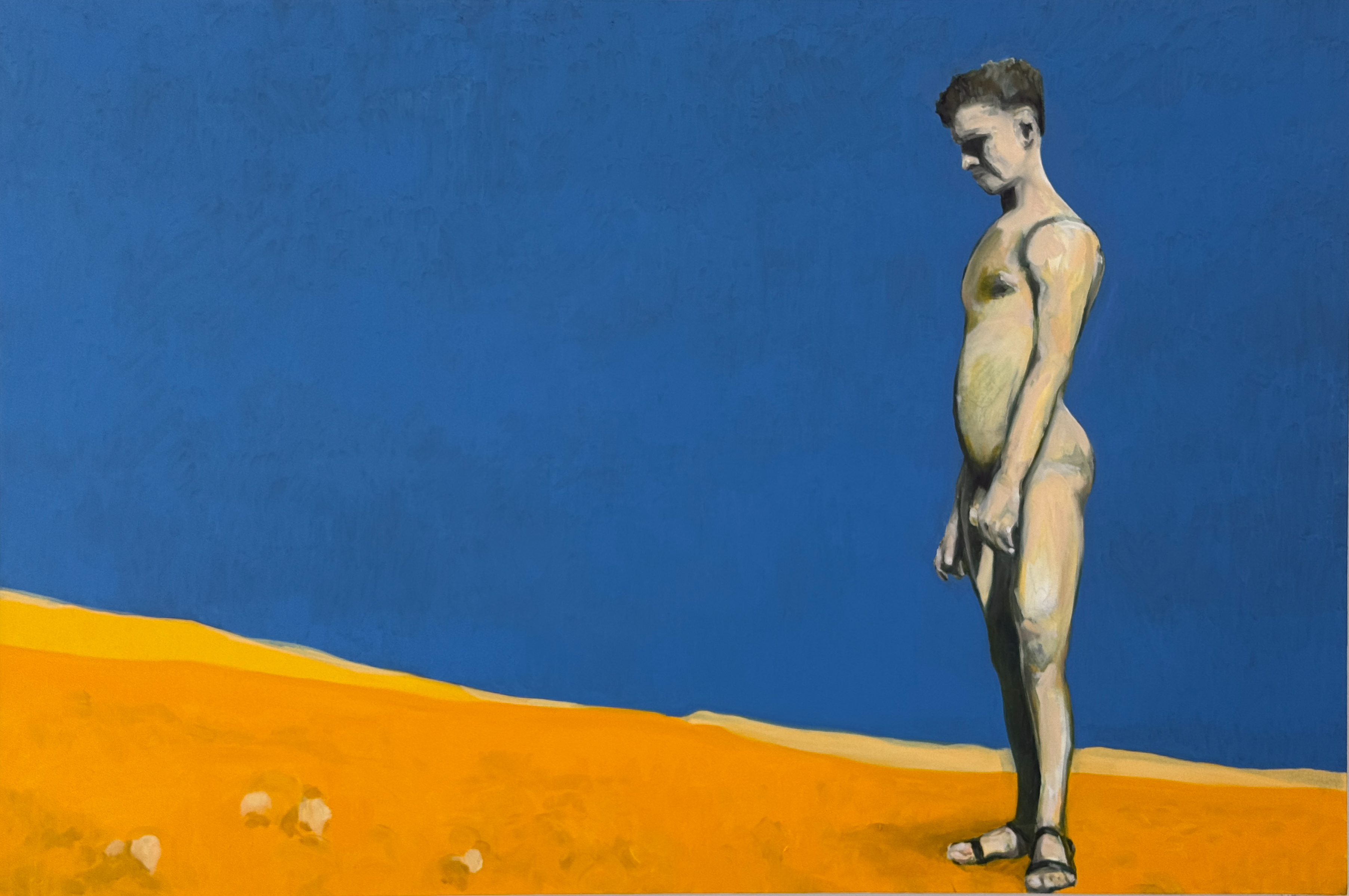
Resilience takes place years after Revelation and returns to the beach as a space for thinking rather than fantasy. The figure is older now, carrying a long-practised double life: one self that can love men openly with close friends and family who have long since become allies, and another that must still be carefully managed within certain workplaces and wider social settings. He stands within the open expanse of sand and sky with a certain solidity, but there is still effort in the shoulders and torso, as if he is continually adjusting how much of himself can be shown in any given situation. The beach becomes a mental landscape where he can acknowledge both lives at once, without having to perform either.

The colour blocks continue the language established earlier in the series but feel more settled and structured around the body. Deep blues signal the ongoing cognitive work of keeping these different selves aligned enough to function, while warmer tones introduce a quieter sensuality that is no longer entirely suppressed. Passages of earth green on the torso read as grounding, pointing to decisions made from accumulated lived experience rather than from fear alone. The balance of these colours, and the way they sit against the figure in the landscape, describe a negotiation between protection and openness that has become more practised but no less demanding.

In this context, resilience is not about overcoming shame once and for all but about managing its return. It is the repeated decision to stay honest with himself, even while consciously performing what is required to survive in particular workplaces, friendships and social settings. The painting holds that mix of steadiness, vulnerability and accumulated fatigue, marking a stage where he knows who he is, yet is still working out how to live that truth across the split realities his life demands.

Revelation

140 x 180 cm  · Available

Revelation marks the moment when what has been carried privately in thought becomes fully embodied. The figures are placed within an interior space where light, objects and surfaces all seem to echo earlier reflections, one of them being the artist himself. This is not yet a public announcement, but there is a new clarity in how he occupies the room, as if the realisation reached alone on the beach is now being fully felt and affirmed in his body.

In this painting the colour blocks become as important as the body in registering that shift. Earlier fields of yellow optimism are largely painted out in a softened cream, while a more insistent red takes their place and begins to drive the image. A small, compressed area of blue is pushed to the side, suggesting that logical argument has less to offer than instinct in deciding how to live, particularly within the social and political climate of the 1980s UK. The relationship between the figure, the architecture and these changing planes of colour hints at a mind testing out a different story about who he might be.

Revelation is less about naming an identity than about recognising that a previous way of explaining oneself no longer fits. The painting sits with that mixture of clarity and uncertainty, where something has been seen and cannot be unseen, but where the implications of that realisation are still unfolding.

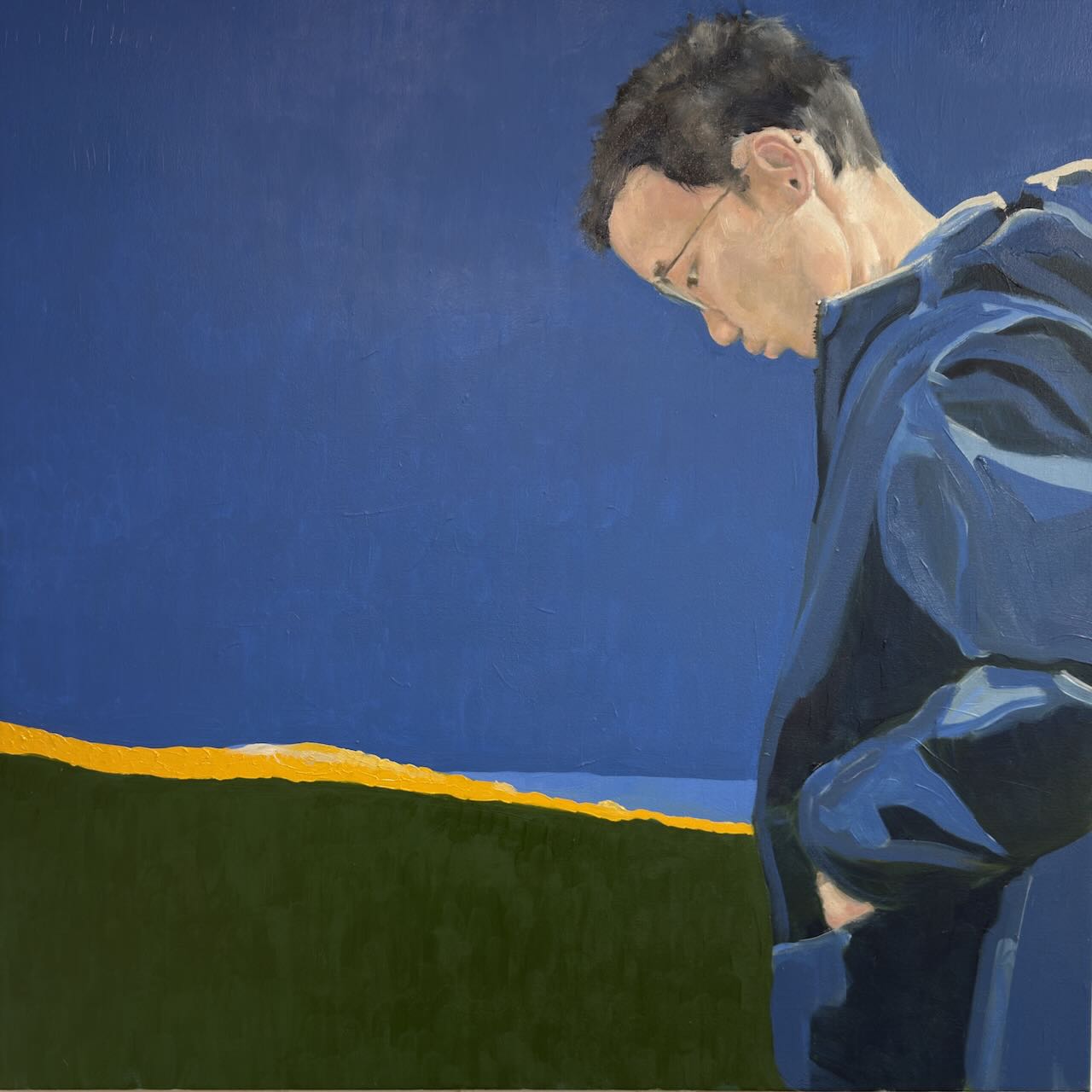
Fuck the Family Values

100 x 100 cm  · Available

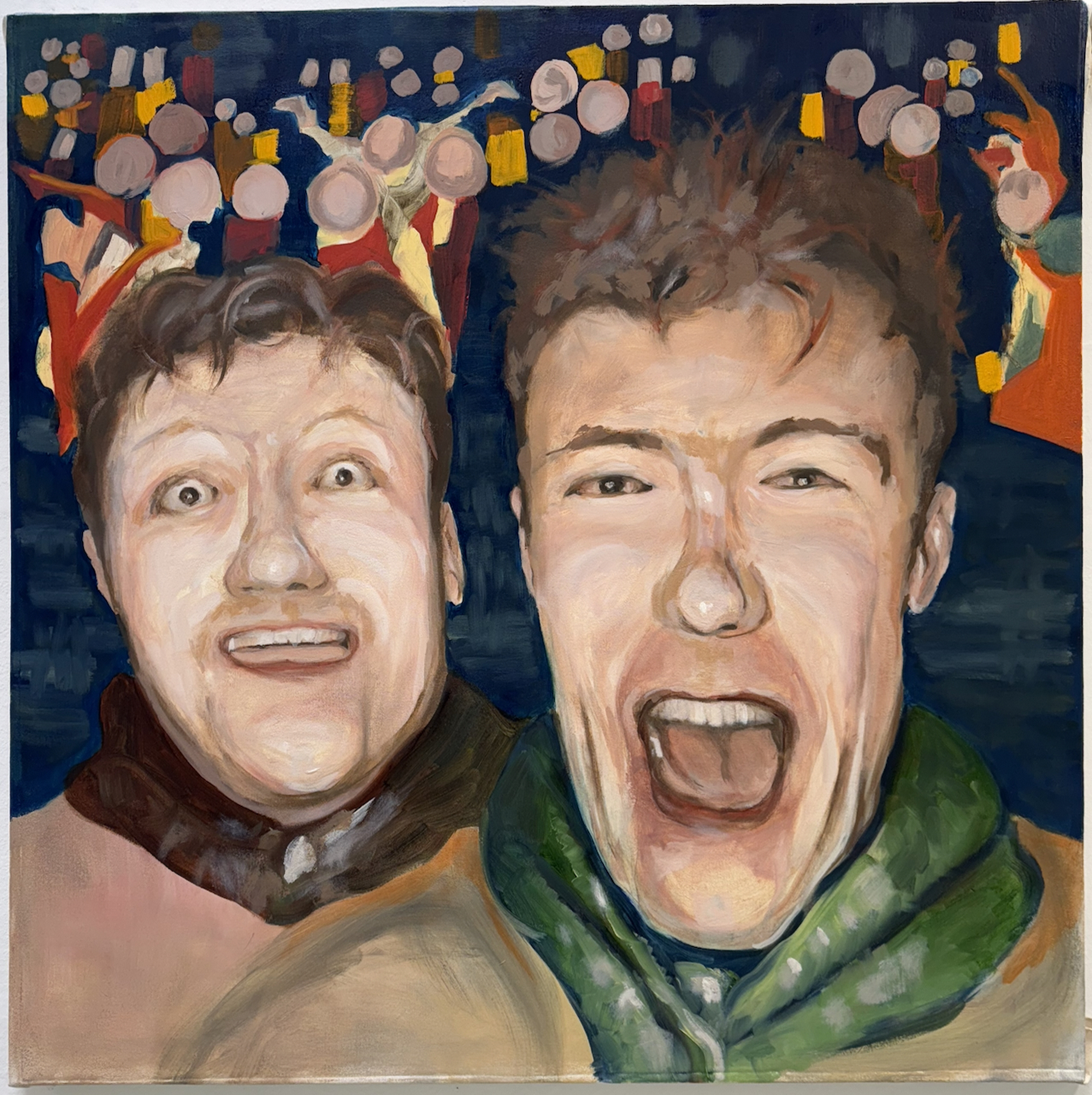
This portrait is included in the Reflections of a Queer Life body of work. 1983. He was twenty years old and slowly making sense of his sexuality in a world shaped by politics, religion and what people called family values. The excitement of who he really was ran alongside the weight of keeping it hidden. In these two faces, that moment of breaking free is caught — raw, loud, and completely alive.

Disclosure

140 x 180 cm  · Available

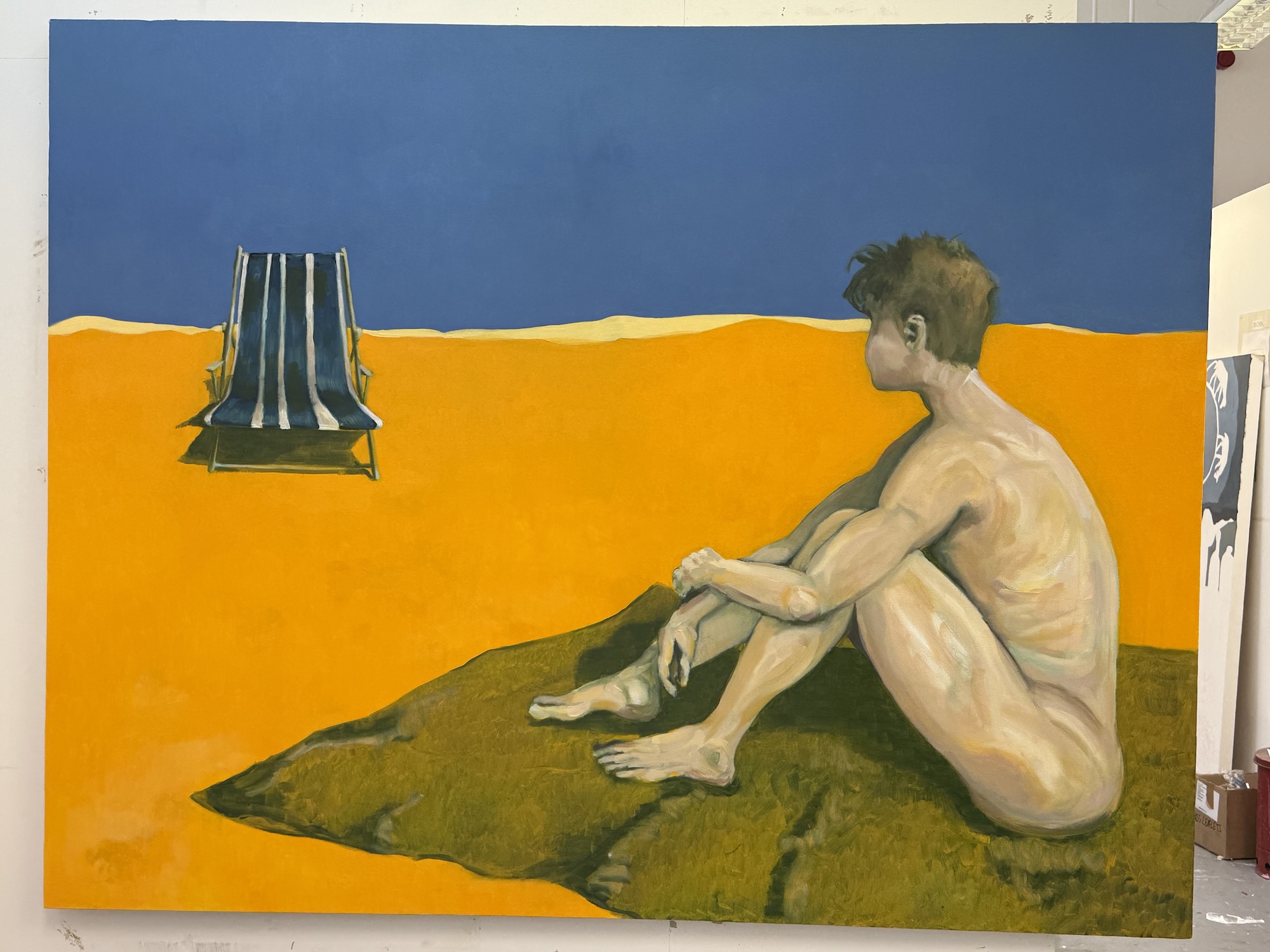
Disclosure sits close to the moment where something long held privately starts to press against the surface. The figure is positioned on a wide, empty beach beside a single deck chair, with land, sea and sky opening out around him. The vastness of the setting suggests possibility rather than confinement, and the empty chair becomes a place in his mind: he views himself sitting in the deck chair and looking back, quietly disclosing who he is for the first time.

The painting focuses on the point where a long-suppressed understanding begins to take on spoken form. In this painting the tilt of the head, the angle of the torso and the space between the body and the chair all register the strain and relief of that first admission. The distance between them opens up a conversational space, an invitation to address himself directly in a landscape broad enough to hold the consequences of what is being said.

Rather than staging a dramatic confession, the painting stays with the quieter, more ambiguous work of disclosing something first to oneself. The empty chair points to an ongoing dialogue rather than a single revelation, suggesting that these threshold moments are rarely singular; they repeat over time, each one shifting the balance between secrecy, risk and the possibility of being recognised.

A Related Work

Catalogued within the separate Self Discovery series, but directly related in theme and worth seeing alongside this body of work.

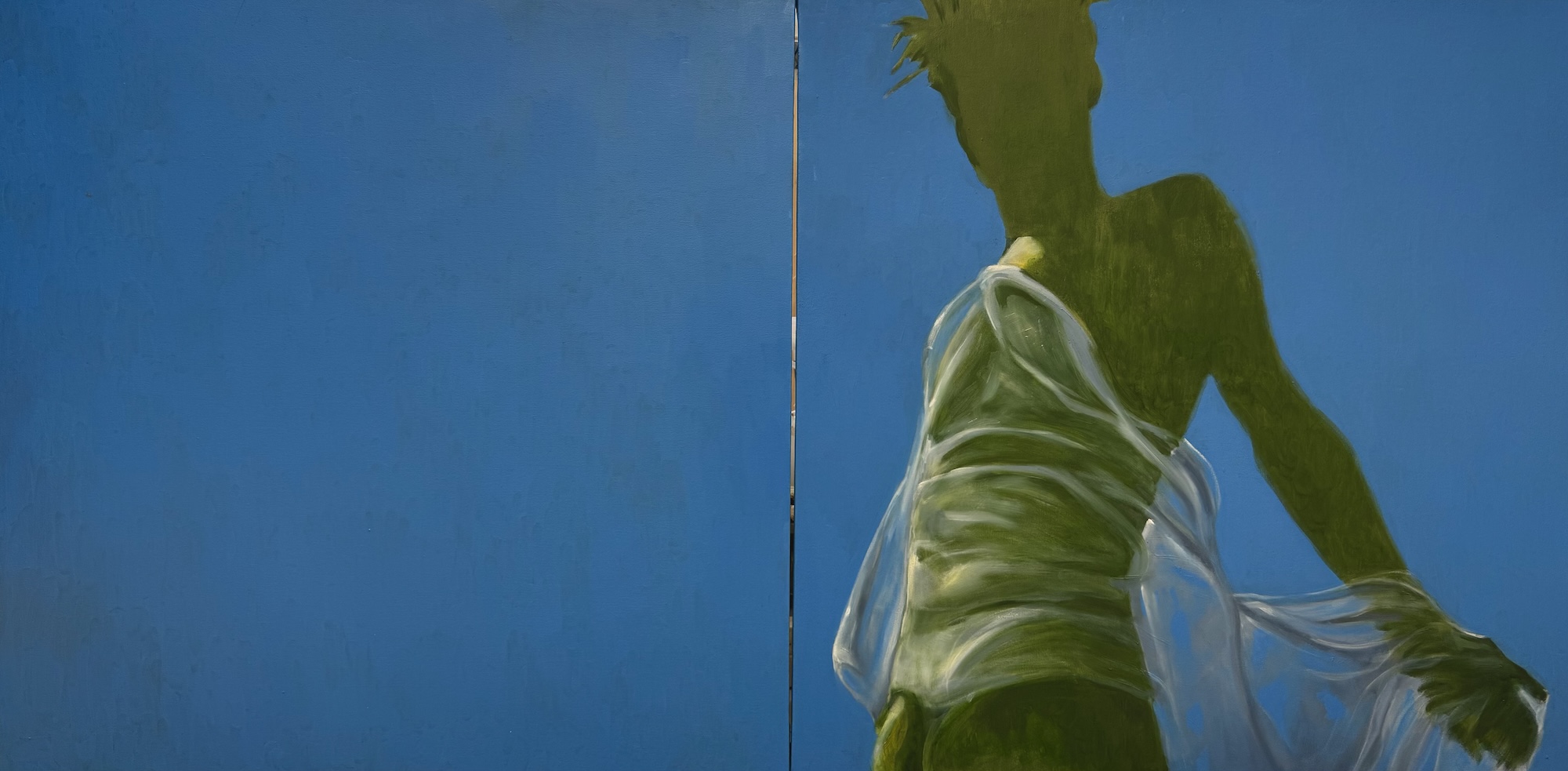
Male in Shadow

Diptych, each canvas 100 x 100 cm  · Available

Male in Shadow is concerned with the relationship between visibility and concealment. The figure is neither fully lit nor entirely obscured, held in the uncertain space where the eye must work to resolve what it is seeing. In the context of the Self Discovery series, this becomes a meditation on selective self-disclosure: the parts of experience brought forward, and those kept back.

Press

Enquiries

The studio welcomes enquiries from curators, collectors, and organisations interested in acquiring existing work or commissioning new pieces within this body of work.

Get in touch